Current Projects

Able MN Burn Building
New live fire training structure


Tulsa Fire Department Training Center and Homeland Security Building
New live fire training structure


Cherokee GA Live Fire Training Structure
New live fire training structure

Burn Building Maintenance

BASIC MAINTENANCE
 
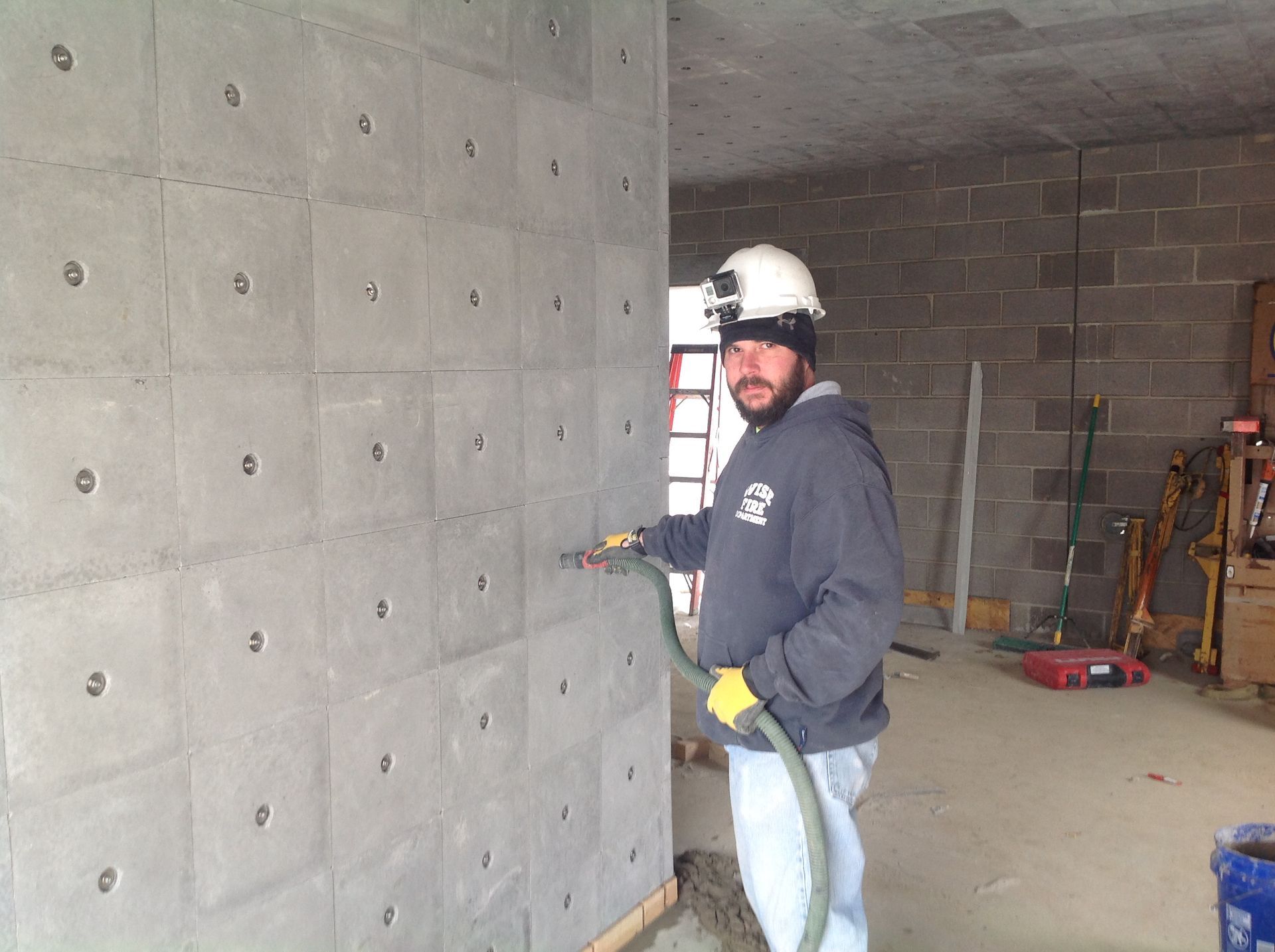
It is important to understand that we recommend that you replace missing bolt hole plugs  in the live fire lining system every three months for your burn building structure.  However, it is not a problem to continue training as you lose plugs during the three month period.  The plugs  seal the bolt hole and  restrain the nuts  from “backing off”. As long as maintenance is performed on a regular basis, we find that the materials and labor required is very minimal.  
 
Finally, in addition to daily inspections required per your SOP, we encourage you to inspect your burn building each time you perform tile maintenance.  You should look for any cracks that might develop in the concrete structure and pay particular attention to the condition of the door and window shutters.  Cracks in the concrete structure can allow water to  seep into the insulation behind  the linings, which can cause severe problems in freezing weather.  This has not been a problem on structures that are designed with the concrete frame  promoted by HTL, but has been an issue on some of the older refurbished structures.  Any cracks found behind our linings must be repaired as soon as practical.
 
Doors and windows that might become loose present a particular safety issue for obvious reasons and require immediate repair and/or replacement. Check them on a regular basis to ensure anchors are tight and that shutters and latches swing and operate properly. If your structure includes a temperature monitoring system, expect thermocouples to require periodic replacement.   You should keep a number of spare thermocouples on hand.  If you have a temperature recorder (like a Yokogawa or Honeywell unit), the digital display will  show a series of asterisks, or an artificially high or low temperature when a thermocouple requires replacement.  See maintenance instructions for your particular system. 
 
We hope this information is useful to you.  HTL is committed to providing the safest training environments possible.  We believe this information, and the attached documentation helps us all to  achieve that goal.

Live Fire Training Recommendations

PRE-BURN AND CURING RECOMMENDATIONS
 
New structures or refurbished structures with new concrete block walls should be allowed to cure for two months before you start burning.  The idea is to allow the concrete and concrete block walls to dry out as much as practically possible before you burn.  High temperatures associated with burning will draw the water out of the mortar joints and concrete.  If too much water is still present, concrete can literally explode as the water turns to steam, creating pressures that are greater than the tensile strength of the concrete.  Further, as water is drawn out of the  block mortar joints, the mortar will lose its’ bond with the  block. This will eventually occur regardless of how long you wait before burning.  In time, the mortar will dry out and crack away from the concrete block in the hottest burn areas.
 
We have a pre-burn procedure that should be followed after replacing a significant number of fire tile plugs.  Burning pallets, allowing them to burn out without extinguishment, develops some heat to allow the bolt hole plugs to harden before you hit them hose streams.

Commissioning New or Refurbished Burn Building

High Temperature Linings would like to offer some basic advice regarding your use of your new or refurbished burn building. Keep in mind that we are not fire training officers. We are not even fire fighters. However, we have been assisting fire training divisions in designing, protectingand repairing live fire training structures for over fifteen years, and have completed work on nearly two hundred training structures. Further, Bill Glover, President of our company, has served on the NFPA Technical Training Committee on Fire Service Training since 2002. We believe our experience offers a unique insight into the use of the facilities that we protect and compels us to make the suggestions. We will start posting our findings often on this blog. 


Standard Operating Procedures

Often, training chiefs tell us they follow NFPA 1403, as if that is a SOP. Please understand that 1403 “provides recognized safe practices for conducting live fire training evolutions”. However, we do not consider the document to constitute a standard operating procedure for one specific structure. Instead, the standard is very broadly based, addressing general important issues that must be addressed and applied to the particular structure you are using for your training. It addresses acquired structures as well as fixed permanent burn buildings. It addresses Class A fuels used in both acquired structures and permanent structures, as well as gas fired simulators that are used in both permanent and mobile structures.

 It is therefore critical that you develop a SOP for your specific structure, applying 1403 to your circumstances and configuration of your structure. Of course, there are many SOPs out there, developed by various training divisions who are generally happy to share them with others. We always encourage you contact your peers with similar structures for ideas and experiences. There is a complete list of all of the projects that HTL has completed on our website. We are sure our customers would welcome the opportunity to exchange information.

The idea of a SOP is to tailor the document to reference not only your structure, but each room within the structure, each means of escape, and even each evolution.

 Please give us a call if you have any questions, comments or suggestions.

Temperature Monitoring Systems

If you have a temperature monitoring system, we have major concerns with using temperature monitoring systems as safety devices for your live fire training.  Simply put, don’t do it.  Use the system to monitor and record  relative conditions in the facility while you are following your SOP.  If the SOP is followed, the environments developed in the structure will be those that you have anticipated and planned for.  If you don’t follow your SOP, you’re on your own and your training 
officers, especially, are at risk